
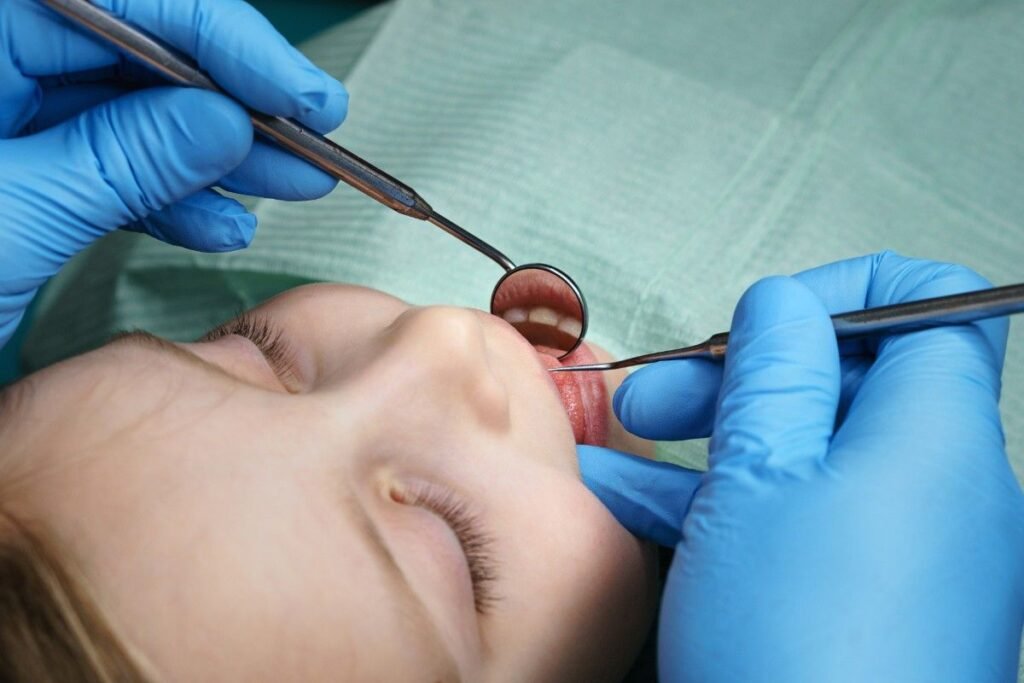
A frenectomy is a simple, safe, and precise dental procedure performed to correct a restrictive frenum, the small tissue band beneath the tongue, upper lip, or lower lip. When this tissue is too tight or thick, it can affect speech, breastfeeding, oral hygiene, spacing of teeth, or overall mouth function. A frenectomy gently releases this tissue to improve mobility, comfort, and long-term oral development. Using advanced laser or minimally invasive surgical techniques, the procedure is quick, virtually painless, and ensures faster healing. Frenectomy supports better speech, improved feeding, proper tooth alignment, and enhanced oral comfort for both children and adults.
Difficulty speaking clearly
Restricted tongue or lip movement
Gaps between front teeth
Challenges with breastfeeding or eating
Frequent oral discomfort or tension
Naturally short or thick frenum
Genetic anatomical variations
Developmental restrictions from birth
Lip or tongue-tie conditions
Oral habits affected by mobility issues
Oral Evaluation: Dentist assesses frenum thickness and mobility restriction.
Treatment Planning: Decides between laser or traditional surgical approach.
Local Anesthesia: Ensures a comfortable, painless procedure.
Frenum Release: Tissue is carefully trimmed or lasered for improved movement.
Healing & Guidance: Post-care instructions support quick recovery.
Improves tongue mobility
Enhances speech clarity
Supports proper feeding
Prevents spacing issues
Promotes oral comfort
A frenectomy is a minor procedure that removes or releases a restrictive frenum to improve oral function.
No. Local anesthesia and laser options make the process comfortable with minimal discomfort afterward.
Children or adults with tongue-tie, lip-tie, speech issues, breastfeeding challenges, or restricted oral movement may require it.
Healing is typically quick usually within a few days, especially with laser-assisted procedures.
Yes. Many patients experience noticeable improvement in tongue movement, speech clarity, and feeding ability.
Expert treatments for every smile
We’re here to help you with comfortable, modern, and affordable dental treatments.
Trustindex verifies that the original source of the review is Google. Good care and servicePosted on GoogleTrustindex verifies that the original source of the review is Google. I went to many clinic for my teeth arrangement problem but Dr Arun Surya gave me a clear explanation and proper treatment plan ,the doctors are well experienced and knowledgeable each treatment was done to me by the expert in that field thanks for the utmost care the treatment are also cost friendlyPosted on GoogleTrustindex verifies that the original source of the review is Google. Good treatment. Highly recommended to everyonePosted on GoogleTrustindex verifies that the original source of the review is Google. Good ambiance. Affordable costPosted on GoogleTrustindex verifies that the original source of the review is Google. Best treatment with affordable price. Well maintained clinic. Highly recommend to everyone.Posted on GoogleTrustindex verifies that the original source of the review is Google. Best treatment with affordable costPosted on GoogleTrustindex verifies that the original source of the review is Google. Good treatmentPosted on GoogleTrustindex verifies that the original source of the review is Google. Got my dental crown fixed here after my old one came loose. The fitting was perfect, quick, and painless. Affordable charges and excellent service by Dr. Arunsurya.