
Dental impactions occur when a tooth is unable to emerge fully through the gums, leading to discomfort, swelling, and potential infection if left untreated. This condition is commonly seen with wisdom teeth but can affect other teeth as well. Early diagnosis and timely treatment are essential to prevent damage to nearby teeth and maintain healthy oral function. At our clinic, we use advanced imaging, precise evaluation, and minimally invasive techniques to ensure comfortable and effective care. Whether the impaction is partial or complete, our specialists create a personalized treatment plan to restore comfort, protect your smile, and support long-term oral health.
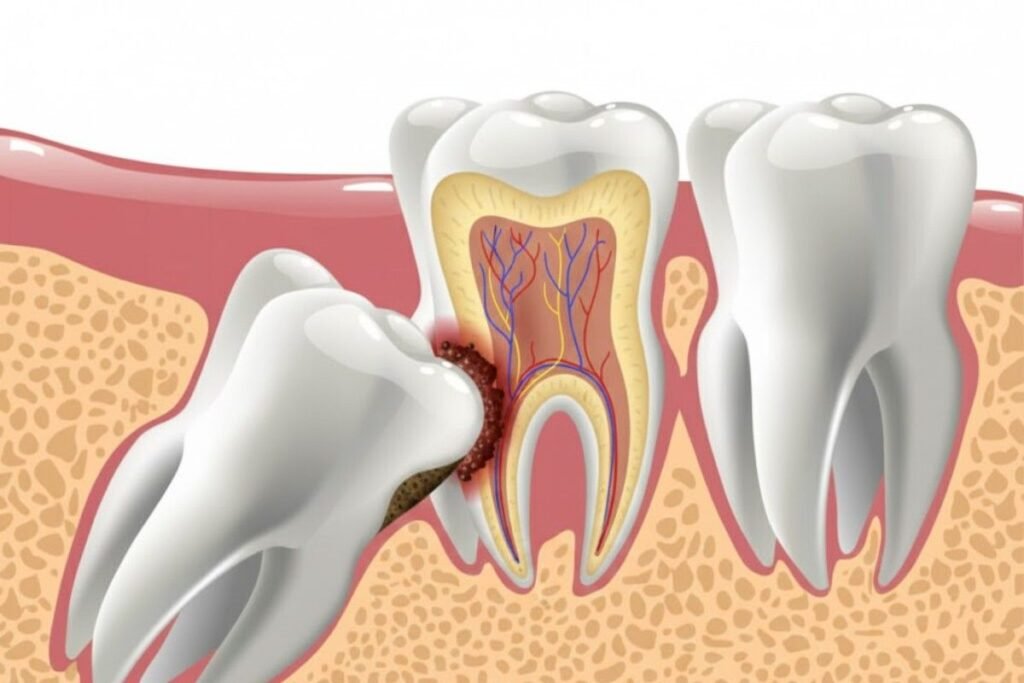
Persistent pain or pressure near the jaw
Swelling, redness, or tenderness in the gums
Difficulty opening the mouth or chewing
Bad breath or unpleasant taste
Gum infection or pus around the impacted area
Insufficient space in the jaw for eruption
Abnormal tooth angulation or positioning
Thick gum tissue blocking proper emergence
Genetic predisposition to crowded teeth
Early loss or retention of baby teeth affecting alignment
Clinical Examination: The dentist evaluates symptoms, jaw structure, and gum health.
Digital Imaging: X-rays or CBCT scans identify tooth position and severity.
Treatment Planning: A customized approach is designed for safe and effective removal or correction.
Procedure Execution: Minimally invasive techniques are used to relieve impaction and restore comfort.
Post-Care Guidance: Healing support, medication, and follow-up checks ensure smooth recovery.
Fast pain relief
Prevents future infection
Protects nearby teeth
Restores chewing comfort
Supports long-term health
1. What is a dental impaction?
A dental impaction occurs when a tooth fails to emerge fully, causing discomfort, swelling, or infection.
2. Are impacted teeth always painful?
Not always. Some impacted teeth remain symptom-free but may still cause hidden damage, so evaluation is essential.
3. How do dentists diagnose impactions?
Dentists use clinical examination along with digital imaging like X-rays or CBCT scans to determine the tooth’s exact position.
4. Is treatment for impactions complicated?
No. With modern minimally invasive methods, treatment is safe, efficient, and far more comfortable than traditional approaches.
5. How long does recovery take after treatment?
Most patients recover within a few days to a week, depending on the severity of the impaction and the procedure performed.
Expert treatments for every smile
We’re here to help you with comfortable, modern, and affordable dental treatments.
Trustindex verifies that the original source of the review is Google. Good care and servicePosted onTrustindex verifies that the original source of the review is Google. I went to many clinic for my teeth arrangement problem but Dr Arun Surya gave me a clear explanation and proper treatment plan ,the doctors are well experienced and knowledgeable each treatment was done to me by the expert in that field thanks for the utmost care the treatment are also cost friendlyPosted onTrustindex verifies that the original source of the review is Google. Good treatment. Highly recommended to everyonePosted onTrustindex verifies that the original source of the review is Google. Good ambiance. Affordable costPosted onTrustindex verifies that the original source of the review is Google. Best treatment with affordable price. Well maintained clinic. Highly recommend to everyone.Posted onTrustindex verifies that the original source of the review is Google. Best treatment with affordable costPosted onTrustindex verifies that the original source of the review is Google. Good treatmentPosted onTrustindex verifies that the original source of the review is Google. Got my dental crown fixed here after my old one came loose. The fitting was perfect, quick, and painless. Affordable charges and excellent service by Dr. Arunsurya.