
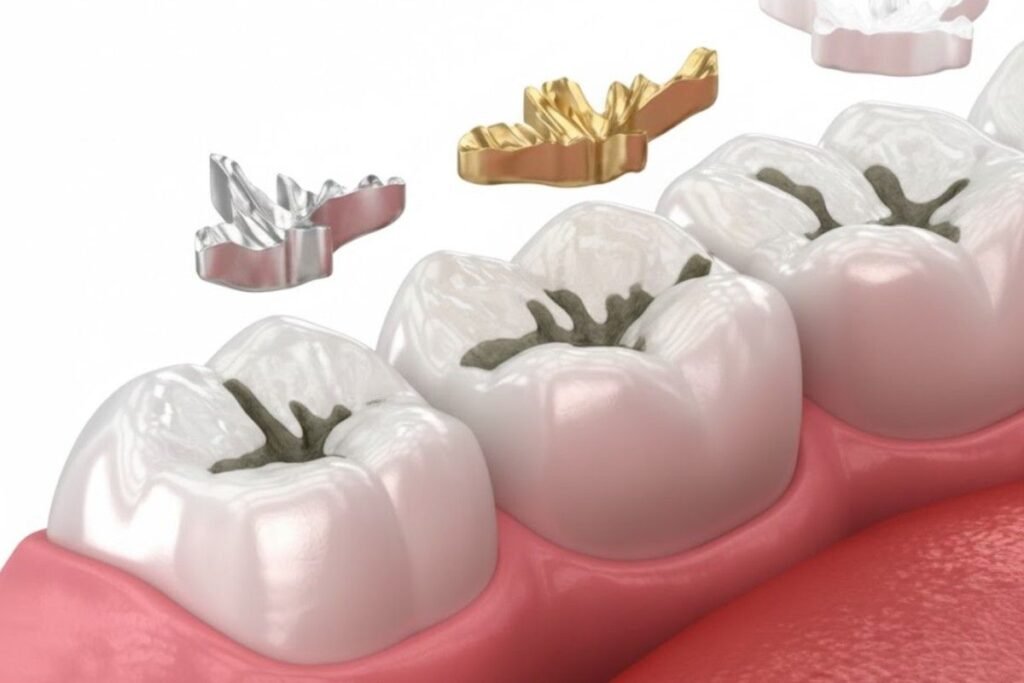
Restorative fillings are used to repair teeth damaged by decay, fractures, or wear, helping restore strength, function, and natural appearance. Modern dental fillings are made using tooth-colored composite materials that blend seamlessly with your smile while supporting long-term durability. The procedure involves removing decay, cleaning the affected area, and placing a filling that rebuilds the tooth’s shape and prevents further damage. Restorative fillings not only stop cavities from progressing but also protect overall oral health and improve chewing comfort. With advanced bonding techniques, these fillings provide a secure, aesthetic, and long-lasting solution for maintaining healthy, beautiful teeth.
Tooth sensitivity to hot or cold
Visible holes or dark spots
Pain while chewing or biting
Food getting stuck in teeth
Rough or broken tooth edges
Bacterial tooth decay
Enamel erosion from acids
Cracked or fractured teeth
Old, failing metal fillings
Poor oral hygiene habits
Dental Examination: Dentist identifies decay or damage.
Decay Removal: Affected tooth material is safely cleaned out.
Tooth Preparation: Surface is shaped for bonding.
Filling Placement: Composite material is layered and hardened.
Polishing & Shaping: Tooth is refined for natural appearance and comfort.
Prevents further decay
Restores tooth strength
Natural-looking results
Improves chewing comfort
Long-lasting protection
1. What are restorative fillings?
They are tooth-colored materials used to repair decayed or damaged teeth and restore natural function.
2. Do fillings hurt?
No. Local anesthesia ensures a comfortable, painless procedure with minimal sensitivity afterward.
3. How long do fillings last?
Composite fillings typically last 5–10 years or more with proper care.
4. Are tooth-colored fillings safe?
Yes. They are biocompatible, metal-free, and bond securely to natural teeth.
5. When do I need a filling?
If you have sensitivity, visible cavities, or biting discomfort, a filling may be necessary to stop worsening damage.
Expert treatments for every smile
We’re here to help you with comfortable, modern, and affordable dental treatments.
Trustindex verifies that the original source of the review is Google. Good care and servicePosted onTrustindex verifies that the original source of the review is Google. I went to many clinic for my teeth arrangement problem but Dr Arun Surya gave me a clear explanation and proper treatment plan ,the doctors are well experienced and knowledgeable each treatment was done to me by the expert in that field thanks for the utmost care the treatment are also cost friendlyPosted onTrustindex verifies that the original source of the review is Google. Good treatment. Highly recommended to everyonePosted onTrustindex verifies that the original source of the review is Google. Good ambiance. Affordable costPosted onTrustindex verifies that the original source of the review is Google. Best treatment with affordable price. Well maintained clinic. Highly recommend to everyone.Posted onTrustindex verifies that the original source of the review is Google. Best treatment with affordable costPosted onTrustindex verifies that the original source of the review is Google. Good treatmentPosted onTrustindex verifies that the original source of the review is Google. Got my dental crown fixed here after my old one came loose. The fitting was perfect, quick, and painless. Affordable charges and excellent service by Dr. Arunsurya.