
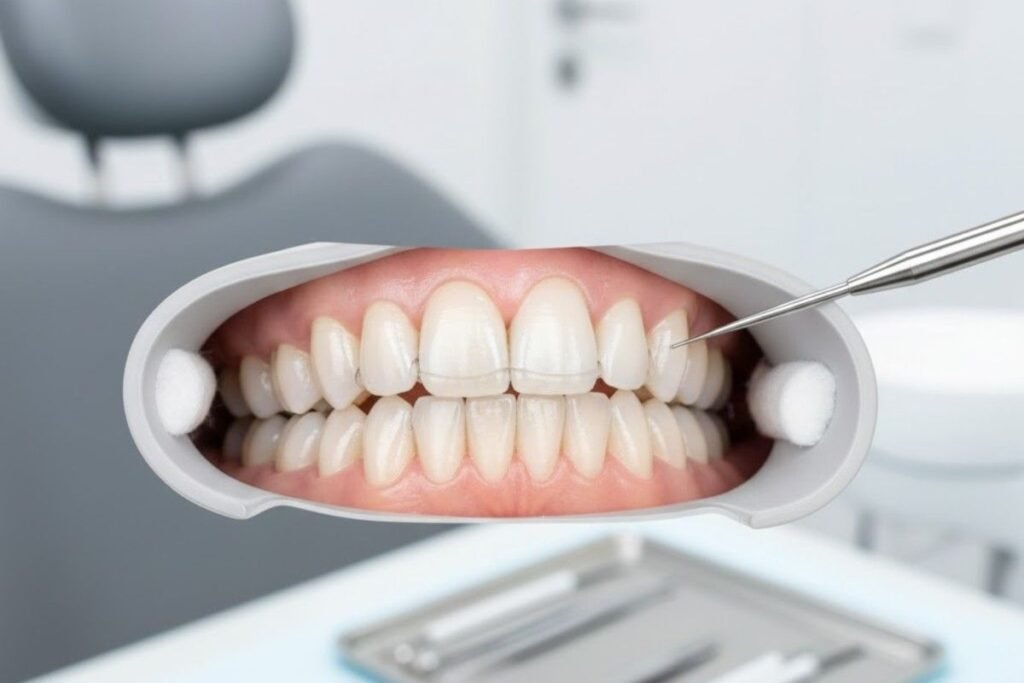
Dental splinting is a minimally invasive procedure used to stabilize loose or mobile teeth caused by gum disease, trauma, or weakened supporting bone. By bonding weak teeth together using a thin, durable splint, the procedure redistributes biting forces and provides essential support for healing. Splinting helps preserve natural teeth, improve chewing comfort, and prevent further mobility. It can be temporary or permanent depending on the condition of the gums and bone. With advanced adhesive materials and precise clinical techniques, dental splinting offers an effective solution to maintain tooth stability, enhance oral function, and extend the lifespan of compromised teeth.
Teeth feeling loose or shaky
Pain or discomfort while chewing
Gum recession or bone loss
Teeth shifting or spacing
Sensitivity due to mobility
Advanced periodontal disease
Accidental dental trauma
Bone loss from infection
Grinding or clenching habits
Weak ligament support
Clinical Evaluation: Dentist assesses tooth mobility and gum health.
Cleaning & Preparation: Affected teeth are cleaned for optimal bonding.
Splint Placement: A fiber or metal splint is bonded across loose teeth.
Stabilization Check: Bite is adjusted to ensure proper function.
Follow-Up Care: Maintenance instructions support long-term stability.
Stabilizes loose teeth
Improves chewing comfort
Prevents further mobility
Preserves natural teeth
Enhances oral function
1. What is dental splinting?
It is a procedure that connects loose teeth using a strong splint to improve stability and function.
2. Is splinting permanent?
It can be temporary or permanent depending on gum health, bone support, and treatment goals.
3. Does splinting hurt?
No. The process is painless and minimally invasive, requiring no drilling of healthy tooth structure.
4. Who needs dental splinting?
Individuals with loose teeth due to periodontal disease, trauma, or weak bone support may benefit.
5. How long does a splint last?
With good oral hygiene, splints can last several months to years, based on the type used.
Expert treatments for every smile
We’re here to help you with comfortable, modern, and affordable dental treatments.
Trustindex verifies that the original source of the review is Google. Good care and servicePosted onTrustindex verifies that the original source of the review is Google. I went to many clinic for my teeth arrangement problem but Dr Arun Surya gave me a clear explanation and proper treatment plan ,the doctors are well experienced and knowledgeable each treatment was done to me by the expert in that field thanks for the utmost care the treatment are also cost friendlyPosted onTrustindex verifies that the original source of the review is Google. Good treatment. Highly recommended to everyonePosted onTrustindex verifies that the original source of the review is Google. Good ambiance. Affordable costPosted onTrustindex verifies that the original source of the review is Google. Best treatment with affordable price. Well maintained clinic. Highly recommend to everyone.Posted onTrustindex verifies that the original source of the review is Google. Best treatment with affordable costPosted onTrustindex verifies that the original source of the review is Google. Good treatmentPosted onTrustindex verifies that the original source of the review is Google. Got my dental crown fixed here after my old one came loose. The fitting was perfect, quick, and painless. Affordable charges and excellent service by Dr. Arunsurya.